
Maasai Mara National Reserve animals are among the most spectacular and diverse on the African continent, making this Kenyan reserve one of the world’s premier safari destinations. Spanning roughly 1,510 square kilometers in southwestern Kenya, the Maasai Mara is a living stage for nature’s grandest dramas — from the thundering Great Migration to intimate lion pride encounters at dawn. Whether you are a first-time safari-goer or a seasoned wildlife photographer, understanding the rich cast of animals you are likely to encounter is the first step toward an unforgettable experience.
The reserve is an extension of Tanzania’s Serengeti ecosystem, and together they form one of the largest and most biologically rich savanna systems on Earth. This guide takes you through every major species you can expect to find, offers practical tips for maximising sightings, shares real traveler experiences gathered from public discussions, and highlights common mistakes visitors make — so your journey to see the wildlife wonders of Maasai Mara National Reserve is as rewarding as possible.
The Big Five and Beyond: Iconic Animals of Maasai Mara National Reserve
No wildlife guide to the Mara would be complete without starting with the Big Five — lion, leopard, elephant, buffalo, and rhinoceros. These five species were historically named by big-game hunters as the most dangerous animals to pursue on foot, but today they represent the most coveted sightings on any safari itinerary.
Lions
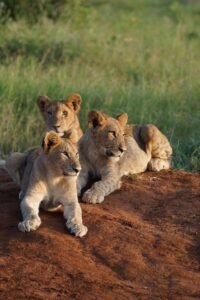
The Maasai Mara is home to one of Africa’s densest lion populations. The reserve’s vast, open grasslands make it an ideal habitat for these apex predators, and with an estimated 850–900 individuals, sightings are relatively frequent compared to many other reserves. Lions here are famously relaxed around vehicles, allowing for remarkably close and extended viewing opportunities. The Marsh Pride, made famous by the BBC’s Big Cat Diary series, has been one of the most documented lion families in the world and continues to thrive in the Musiara area.
Leopards
Elusive and solitary, leopards are the hardest of the Big Five to spot, though the Mara offers better-than-average chances thanks to its dense riverine forests along the Mara River. Early morning and late afternoon drives in wooded areas near Leopard Gorge have yielded some of the most iconic wildlife photographs ever taken on the African continent.
Elephants
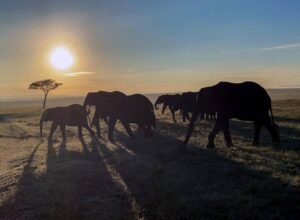
African bush elephants roam the Mara in large, multigenerational herds. The reserve’s northern border with the Mara North Conservancy is particularly rich in elephant activity, and sightings of matriarch-led herds navigating the open plains are common throughout the year. Elephants play a crucial ecological role, acting as ecosystem engineers that shape the landscape for other species.
Cape Buffalo and Black Rhino
Cape buffalo congregate in enormous herds that can number in the hundreds, often seen grazing near water sources. Black rhino, critically endangered across Africa, are present in the Mara in small numbers — primarily within the Mara Triangle and adjacent conservancies. Rhino sightings are rare but deeply memorable, and dedicated rhino tracking experiences are available through select conservancy operators.
The Great Migration: From Lions to Wildebeest and Beyond
The single most celebrated event associated with Maasai Mara National Reserve animals is the Great Migration — an annual movement of approximately 1.5 million wildebeest, 200,000 zebra, and 300,000 Thomson’s gazelle between the Serengeti in Tanzania and the Mara in Kenya. This is frequently described as one of the Seven Wonders of the Natural World and remains one of the most awe-inspiring spectacles in all of wildlife watching.
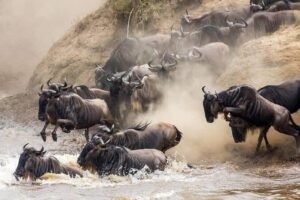
The migration typically reaches the Mara between July and October, culminating in dramatic river crossings where wildebeest must navigate the crocodile-infested Mara River. These crossings, unpredictable in timing and explosive in energy, draw safari-goers from around the world. Even outside migration season, the Mara is teeming with resident wildlife, making it a rewarding destination year-round.
A Complete Guide to Animals in Maasai Mara National Reserve
Beyond the headline species, the Maasai Mara hosts an extraordinary breadth of wildlife that rewards patient and attentive observers. Here is a comprehensive breakdown of the major animal groups you are likely to encounter.
Cheetahs
The Mara’s open grasslands are ideal cheetah habitat, and the reserve supports a healthy population. Female cheetahs with cubs are regularly spotted around Rhino Ridge and the Olare Motorogi Conservancy. Watching a cheetah stalk and pursue prey at speeds of up to 120 km/h is among the most dramatic sightings available anywhere on Earth.
Hippos and Nile Crocodiles
The Mara and Talek rivers teem with hippopotamuses — Africa’s third-largest land animal. Pods of 20 to 50 hippos are commonly seen wallowing during daylight hours. Alongside them lurk Nile crocodiles, some of the largest on the continent, which reach lengths of over 5 metres. During the Great Migration, these crocodiles are the wildebeest’s most immediate threat at river crossing points.
Giraffes and Zebras
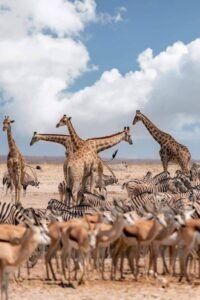
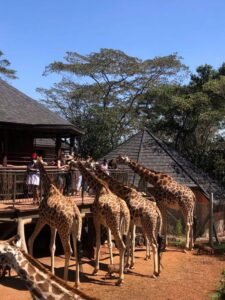
Maasai giraffes — the world’s largest giraffe subspecies — are a constant and graceful presence across the reserve. Their dappled forms silhouetted against acacia trees at golden hour are a quintessential Mara image. Plains zebras, with their bold black-and-white stripes, travel alongside wildebeest during the migration and are resident throughout the reserve year-round.
Read more: https://www.kws.go.ke/parks/maasai-mara-national-reserve
Wild Dogs and Other Predators
African wild dogs, also known as painted wolves, are critically endangered and among the rarest of Africa’s predators. Small packs are occasionally spotted in the northern conservancies. Spotted hyenas are abundant and play a vital ecological role as both predators and scavengers. Side-striped jackals, bat-eared foxes, and servals round out a diverse carnivore community.
Antelopes and Gazelles
The Mara supports a remarkable variety of antelope species. Topi — one of the fastest antelopes — are common and often seen standing sentinel on termite mounds. Impala form the backbone of the food web, supporting cheetahs, leopards, and wild dogs. Eland (Africa’s largest antelope), kongoni (Coke’s hartebeest), Grant’s gazelle, and Thomson’s gazelle all thrive here. Smaller species such as dik-dik and klipspringer are present in rocky outcrops near the escarpment.
Birdlife
With over 570 recorded bird species, the Maasai Mara is a paradise for birdwatchers. Martial eagles, Verreaux’s eagle-owls, lilac-breasted rollers, secretary birds, grey-crowned cranes, and multiple species of vulture are among the must-see avian residents. During the northern hemisphere winter, the Mara receives hundreds of Palearctic migratory species, swelling species counts considerably.
What Real Travelers Say: Insider Tips Based on Traveler Discussions
Drawing on public discussions from platforms like Reddit, TripAdvisor, and Quora, a clear picture emerges of what genuinely elevates a Maasai Mara safari experience — and what can derail it.
What Experienced Visitors Consistently Recommend
Many travelers mention that choosing a camp within or immediately adjacent to the reserve — rather than a lodge several kilometres outside — dramatically increases wildlife encounter quality. Guests at camps in the Mara Triangle and Olare Motorogi Conservancy frequently report waking to the sounds of lions and hyenas and observing game from their tent verandas.
According to traveler discussions, the private conservancies surrounding the national reserve offer a significantly less crowded experience than the main reserve, particularly during the peak migration months of August and September. Visitors report that conservancy areas often limit vehicle numbers at sightings, which creates a more intimate and respectful encounter with the animals.
Frequent visitors report that early morning game drives — departing at 6:00 or 6:30 AM — consistently yield the best predator activity. Lions, leopards, and cheetahs are most active in the cooler morning hours before retreating to shade. Many traveler accounts specifically highlight that staying out through the noon break (permitted in conservancies but not always in the national reserve) allows for witnessing hunts that would otherwise be missed.
Many travelers also emphasize the value of an experienced, knowledgeable guide over vehicle quality or camp luxury. Guides who can read animal behavior, track subtle signs, and position vehicles correctly are described as the single biggest differentiator between an average and an extraordinary safari.
Common Mistakes First-Time Visitors Make
Understanding what to avoid is just as valuable as knowing what to seek out. Based on traveler discussions, here are the most frequently cited pitfalls.
- Spending too little time: Many travelers regret booking only two to three nights. Wildlife sightings are unpredictable, and experts generally recommend a minimum of four to five nights to meaningfully experience the Mara’s diversity.
- Visiting only during the Great Migration: While the migration (July–October) is spectacular, the Mara is exceptional year-round. February and March offer the least-crowded conditions, lush green landscapes, and abundant resident predators.
- Choosing budget operators for guides: According to traveler discussions, cutting costs on guide quality is the most commonly regretted decision. A knowledgeable guide makes an exponential difference in the depth and quality of wildlife encounters.
- Skipping the conservancies: Many first-timers focus only on the main national reserve, unaware that the surrounding conservancies offer superior leopard and cheetah sightings, night drives, and walking safaris — all unavailable inside the reserve itself.
- Wearing inappropriate colours: Bright whites, reds, and neons can disturb animals and other safari vehicles. Neutral, earth-toned clothing (khaki, olive, beige) is strongly recommended by experienced safari-goers.
Read More: https://jetsettrail.com/best-time-to-visit-thailand/
Best Time to See Maasai Mara National Reserve Animals
The Mara operates on two primary seasons: the long rains (March–May) and the short rains (November–December). Wildlife is present throughout the year, but different seasons offer distinct advantages.
July–October (Peak Migration Season)
This is when the migration wildebeest are in the Mara, and river crossings occur. Crowds are highest, prices are at a premium, and advance booking — often 12 months ahead — is essential for the best camps.
January–March (Dry and Green Shoulder Season)
Following the short rains, the Mara is lush and photogenic. Resident predators are active, calving season in the Serengeti draws predators south, and visitor numbers are manageable. Many experienced wildlife enthusiasts consider this one of the best periods to visit.
June and November (Shoulder Months)
June sees the migration building toward the Mara, with increasing concentrations of wildlife and relatively fewer tourists than peak months. November offers lower rates, fewer crowds, and migratory birds in abundance.
Conservation and Responsible Wildlife Viewing
The extraordinary diversity of Maasai Mara National Reserve animals exists in a fragile balance maintained by decades of conservation effort, community partnerships, and responsible tourism. The Maasai people, for whom the reserve is named, are central to this equation — many conservancies operate on a revenue-sharing model that returns significant income to local communities, providing an economic incentive to protect wildlife.
Key threats to the ecosystem include habitat encroachment, human-wildlife conflict, and the pressures of mass tourism. Visitors can contribute positively by choosing certified operators who adhere to the Kenya Wildlife Service’s code of conduct, which includes limits on the number of vehicles at a sighting, minimum distances from animals, and prohibitions on off-road driving in sensitive areas.
Increasingly, private conservancies adjacent to the main reserve are recognised as model conservation areas. By staying in these conservancies, visitors directly fund anti-poaching patrols, veterinary care for injured wildlife, and community schools and clinics.
Practical Planning Tips for Viewing Wildlife Wonders of Maasai Mara National Reserve
Thoughtful preparation significantly enhances the quality of wildlife encounters. Here are the most actionable recommendations based on expert guidance and traveler discussions.
- Choose the right camp location: Opt for a camp inside or on the boundary of the reserve or conservancy. This reduces transfer time and allows for full-day game drives.
- Pack quality optics: A good pair of 8×42 or 10×42 binoculars is considered essential by serious wildlife viewers. A telephoto lens of at least 400mm is recommended for photography.
- Dress appropriately: Layers are essential — mornings and evenings can be surprisingly cool while midday heat can be intense. Neutral earth tones are recommended for all outdoor activities.
- Respect wildlife: Maintain the recommended distances, avoid sudden loud noises, and follow your guide’s instructions at all times. Patient, silent observation is always more rewarding.
- Consider a balloon safari: A hot-air balloon flight at dawn over the Mara provides an unparalleled aerial perspective on the landscape and its inhabitants. Many travelers describe it as one of the most memorable experiences of their lives.
Why Maasai Mara National Reserve Animals Are Worth Every Mile
The Maasai Mara National Reserve animals represent one of nature’s most extraordinary living galleries. From the thunderous crossings of a million wildebeest to the silent stalk of a leopard at dusk, from the gentle majesty of elephant herds to the electric speed of a hunting cheetah, the Mara delivers wildlife experiences that fundamentally change how you see the natural world.
Whether you are drawn by the Big Five and beyond: iconic animals of Maasai Mara National Reserve, or you are here to witness the raw spectacle of the Great Migration, the reserve rewards every level of interest and every style of traveler. The key is to invest in the right preparation, choose responsible operators, and arrive with patience and an open mind.
The Maasai Mara is not simply a destination — it is an experience that stays with you for a lifetime. Plan thoughtfully, travel responsibly, and you will return home not just with photographs, but with a profound and lasting connection to the wild heart of Africa.